
 English
 русский
 Español
 简体中文
简体中文
Recommended products
How Can Modular Rectangular Electrical Connectors Streamline Your System Integration?
Industry NewsAuthor: Admin
- 1 The Engineering Shift Toward Modular Hybrid Interfaces
- 2 Optimizing Reliability with Military-Grade Rectangular Series
- 3 Streamlining Maintenance and Future-Proofing Hardware
- 4 Technical Excellence at Taizhou Henglian Electric Co., Ltd.
- 5 Frequently Asked Questions (FAQ)
- 6 Engineering Comparison: J30J Micro-D vs. J14 Rectangular Connectors
- 7 Industry References
In the high-stakes world of aerospace, defense, and industrial automation, the complexity of cable management often becomes a bottleneck for system efficiency. As systems evolve to require simultaneous transmission of high-current power, sensitive low-voltage signals, and high-speed data, the traditional approach of using multiple discrete interfaces is no longer viable. The adoption of a modular rectangular electrical connector system has emerged as the definitive solution for engineers seeking to minimize footprint while maximizing interconnect reliability. Taizhou Henglian Electric Co., Ltd., a high-tech enterprise specializing in GJB9001C-2017 certified interconnect solutions, provides the technical foundation for these advanced integrations.
The Engineering Shift Toward Modular Hybrid Interfaces
System integration often faces the challenge of "I/O congestion," where the physical space available for bulkhead or panel-mount interfaces is limited. Traditional circular connectors, while robust, often lack the spatial efficiency required for complex hybrid layouts. By utilizing high density rectangular connectors, designers can consolidate various media—ranging from fiber optics and coax to heavy-gauge power contacts—into a single frame.
Comparing Modular Hybrid Design vs. Discrete Connection Methods
While discrete connections offer simplicity in low-complexity circuits, they significantly increase the "Mean Time To Repair" (MTTR) and the overall weight of the wire harness. In contrast, modular hybrid designs utilize multi pin rectangular connectors for power and signal to create a unified interface that reduces the risk of cross-mating and simplifies installation.
| Feature | Discrete Connection (Traditional) | Modular Hybrid Rectangular Connector |
| Space Utilization | Low (Circular patterns leave gaps) | High (Rectangular frames allow stacking) |
| Assembly Time | Extensive (Multiple plug-in actions) | Rapid (One-click mating for all media) |
| EMI/RFI Protection | Requires individual shielding per cable | Integrated shielding within the frame |
| System Weight | Heavier (Due to multiple shells/boots) | Lightweight (Single shell architecture) |
Optimizing Reliability with Military-Grade Rectangular Series
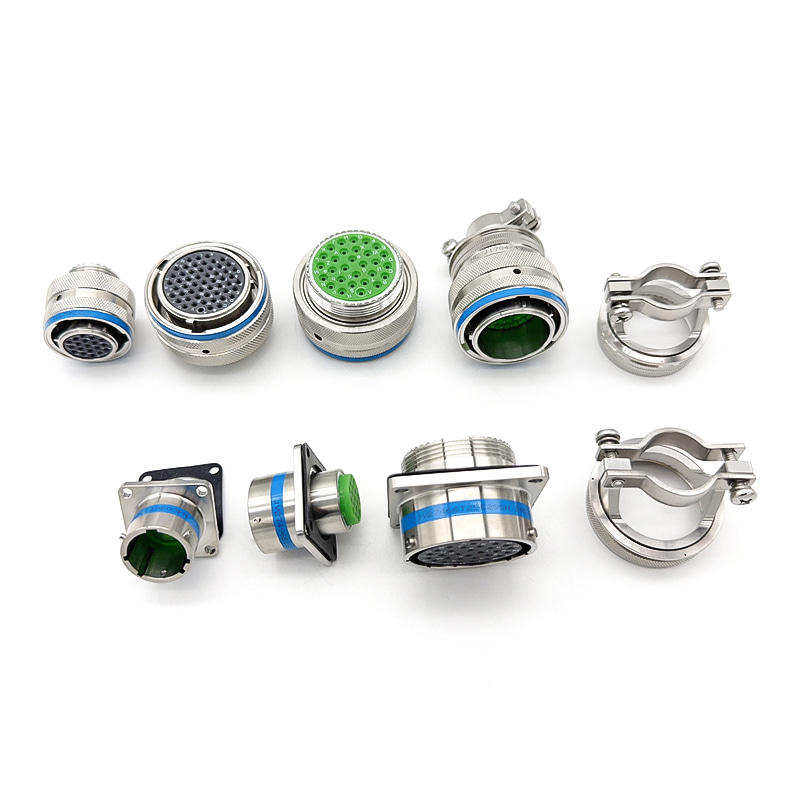
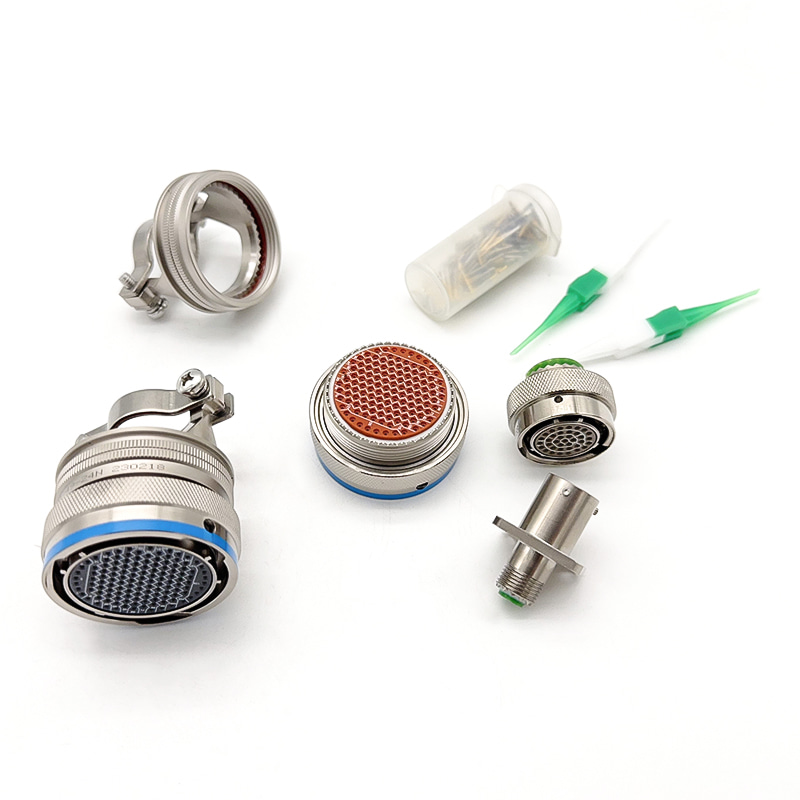
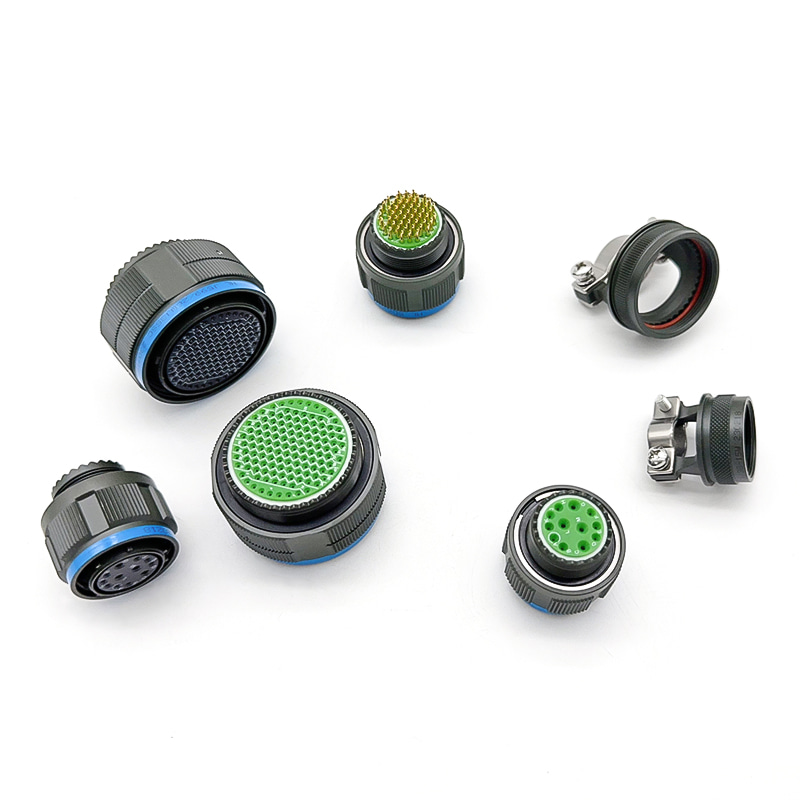
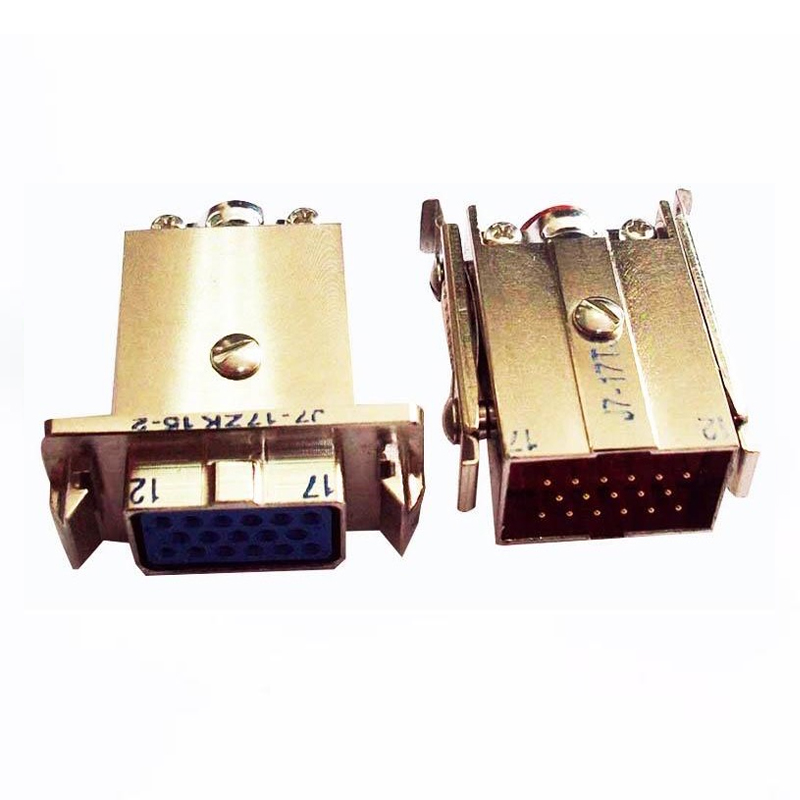
For mission-critical applications such as aerospace and sea installation, reliability is measured by the connector's ability to maintain electrical continuity under extreme vibration and thermal shock. Taizhou Henglian Electric Co., Ltd. offers specialized J30J series rectangular connectors (and related J7, J14, J27 series) that conform to rigorous military standards. These connectors feature high-reliability contact systems, such as twist-pin technology, which ensure multi-point contact even in the most demanding environments.
- Three-Defense Function: Advanced plating and sealing techniques provide resistance against salt spray, mold, and humidity.
- Electronic Compatibility: Engineered shell designs ensure that high-power lines do not interfere with sensitive data signals within the same rectangular electrical connectors assembly.
- High Density Layouts: Utilizing micro-D and sub-miniature contact arrangements to fit over 100 pins into a compact rectangular form factor.
Streamlining Maintenance and Future-Proofing Hardware
One of the most significant advantages of using a customized rectangular connector for industrial automation is the ease of maintenance. Modular inserts allow technicians to replace a single module (e.g., a damaged data port) without discarding the entire connector assembly. This "plug-and-play" capability is essential for nuclear energy and national power grid infrastructure where downtime is costly.
Performance Metrics of Rectangular vs. Circular Enclosures
Engineers must choose between rectangular and circular enclosures based on mechanical stress and mounting requirements. Rectangular shells offer superior polarization and can be mounted side-by-side without the rotational clearance required by circular coupling nuts.
| Metric | Circular Connectors (XC/Y Series) | Rectangular Connectors (J Series) |
| Mating Density | Moderate (Limited by circular geometry) | Maximum (Optimized for panel arrays) |
| Polarization | Keyway-based | Asymmetric shell or guide pins |
| Hardware Mounting | Panel nut or flange | Rack and panel or screw-lock |
Technical Excellence at Taizhou Henglian Electric Co., Ltd.
With over 150 employees and a dedicated technical center, Taizhou Henglian Electric Co., Ltd. has established itself as a leader in the development of high reliability rectangular electrical interfaces. Our production facility in Taixing City is equipped with sophisticated mechanical processing and testing equipment to ensure every product—from the J599 series to the YGD series—meets the "integrity-based" pursuit of excellence. As a qualified supplier for the General Staff and Ministry of Information Industry, we specialize in developing special connectors that solve complex EMI and density challenges for aerospace and weapon systems.
Frequently Asked Questions (FAQ)
- Q1: Can signal and high-power contacts coexist in the same rectangular connector?
Yes, through the use of modular inserts and internal shielding, hybrid rectangular electrical connectors can safely combine high-current power and sensitive data without electromagnetic interference. - Q2: What standards do the J30J series connectors follow?
The J30J series is designed to meet stringent military specifications (similar to MIL-DTL-83513), focusing on high-density micro-miniature requirements for defense electronics. - Q3: How does a rectangular connector handle vibration compared to a circular one?
While circular connectors use threaded coupling, rectangular connectors utilize jack-screws or specialized locking clips that provide equal or superior resistance to decoupling in high-vibration aerospace environments. - Q4: Are these connectors resistant to harsh environmental conditions?
Absolutely. Our products feature "three-defense" functions, making them resistant to corrosion, moisture, and fungi, suitable for sea installation and geophysical exploration. - Q5: Can Taizhou Henglian develop custom connector solutions?
Yes, our technical and quality inspection centers are equipped to develop and produce special electrical connectors tailored to the unique spatial or electrical needs of various users.
Engineering Comparison: J30J Micro-D vs. J14 Rectangular Connectors
For B2B procurement and system design, choosing between the J30J and J14 series is a matter of balancing space constraints against power requirements. Both series are cornerstones of the rectangular electrical connectors portfolio at Taizhou Henglian Electric Co., Ltd., yet they serve distinct roles in military and high-reliability industrial architectures.
1. Architectural and Contact Density Differences
The J30J series is a micro-miniature design (often referred to as Micro-D), whereas the J14 series is a larger, more traditional high density rectangular connectors standard often used for rack-and-panel or cable-to-board applications where robust handling is prioritized.
| Parameter | J30J Series (Micro-D) | J14 Series (High Density) |
| Contact Spacing (Pitch) | 1.27 mm (Ultra-fine) | Typically 2.54 mm or 1.91 mm |
| Contact Type | Twist Pin (Multi-point contact) | Solder or Crimp Pin/Socket |
| Standard Housing | Metal Shell (D-shaped) | Aluminum or specialized plastic frames |
| Primary Strength | Minimal footprint for aerospace | Robust mechanical lifecycle |
2. Electrical and Mechanical Performance
While both are multi pin rectangular connectors for power and signal, their current-carrying capacities differ significantly due to the physical size of the contacts. The J30J is optimized for low-level signal and data, while the J14 can accommodate higher current loads in similar modular configurations.
- Current Rating: The J30J is typically rated at 3A per contact, while J14 variants can support 5A to 10A depending on the pin gauge.
- Vibration Resistance: Both utilize screw-locking mechanisms, but the J30J's twist-pin technology provides superior performance in high-frequency vibration environments common in missile and satellite systems.
- Mating Cycles: The J14 series is often preferred for industrial modular connector systems where frequent maintenance or modular swapping is expected, offering a high durability rating.
3. Application Suitability
Choosing a customized rectangular connector for industrial automation or military use involves evaluating the "Three-Defense" requirements—protection against moisture, salt spray, and fungus. At Taizhou Henglian Electric Co., Ltd., both series undergo rigorous testing in our quality inspection center to ensure GJB9001C-2017 compliance.
| Application Sector | Recommended Series | Technical Reasoning |
| Avionics & Flight Control | J30J Series | Critical weight reduction and high-density signal paths. |
| Ground Radar & Power Grids | J14 / J27 Series | Ease of field maintenance and higher current throughput. |
| Shipboard Equipment | J30J (with sealing) | Space-saving in cramped bulkhead environments. |
4. Why Source from Taizhou Henglian?
Our status as a qualified supplier for Marine equipment and aerospace means we don't just provide parts; we provide a high reliability rectangular electrical interface. Whether you require the ultra-fine precision of the J30J or the rugged versatility of the J14, our 30+ technical experts ensure that the "brand creates value" through modern inspection facilities and sophisticated production equipment.
Industry References
- GJB 9001C-2017: Weapons and Equipment Quality Management System Requirements.
- IEC 60603-2: Connectors for frequencies below 3 MHz for use with printed boards.
- MIL-DTL-83513: General Specification for Connectors, Electrical, Rectangular, Microminiature, Polarized Shell.
- Standards Council of China: GB/T Series for High-Reliability Electrical Interconnects.

- Address : Jiangping South Road, Zhangqiao Industrial Park, Taixing City, Jiangsu Province, China
- Phone : +86 176 0151 5794
- Whatsapp : +86 176 0151 5794
- Email :[email protected]
- Email :[email protected]
Copyright © Taizhou Henglian Electric Co., Ltd
