
 English
 русский
 Español
 简体中文
简体中文
Recommended products
Why A, B, or X Coding is Essential When Specifying a Circle Electrical Connector for Automated Sensors
Industry NewsAuthor: Admin
- 1 The Engineering Logic Behind Connector Coding
- 2 The Role of A-Coding in Sensor Integration
- 3 High-Speed Data and X-Coding Essentialism
- 4 Specifying Connectors for Harsh Environments
- 5 Conclusion: Selecting the Right Interface
- 6 Frequently Asked Questions (FAQ)
- 6.1 1. Can an A-coded plug fit into an X-coded socket?
- 6.2 2. Why is A-coding the most common for automated sensors?
- 6.3 3. Does Taizhou Henglian Electric Co., Ltd. provide custom coding?
- 6.4 4. What is the difference between M12 A-coded and M8 A-coded?
- 6.5 5. Is X-coding necessary for 100Mbps Ethernet?
- 7 Related Industry References
In the high-precision world of industrial automation, the integrity of signal and power transmission hinges on the physical interface of the circle electrical connector. As systems become more complex, the risk of cross-mating different voltage or signal types increases. This is where "coding" or "keying" becomes a critical engineering specification. Proper coding ensures that connectors with the same shell size but different electrical functions cannot be interchanged, preventing catastrophic equipment failure.
Taizhou Henglian Electric Co., Ltd., founded in 2011 and based in Taixing City, is a high-tech leader in the development and production of specialized electrical connectors. With over 150 employees and advanced testing facilities, we provide high-density, high-reliability solutions—including Y, J599, and XC series—that meet rigorous military and industrial standards (GJB9001C-2017) for aerospace, power grids, and automated systems.
The Engineering Logic Behind Connector Coding
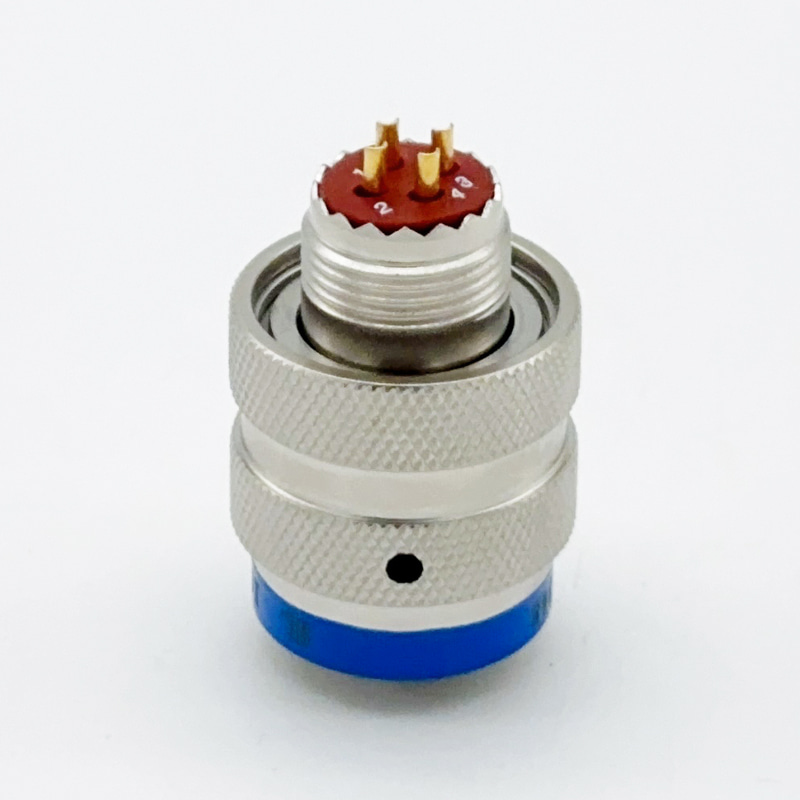
Coding is a mechanical safety feature integrated into the insulator of a circle electrical connector. It prevents "mismating," which is the accidental connection of a male plug into the wrong female socket. For engineers, understanding how to choose the right coding for M12 connectors is the first step in designing a fail-safe sensor network.
Functional Overview of A, B, and X Coding
While A-coding is the most prevalent for standard sensor data, B-coding and X-coding serve specialized roles in fieldbus communication and high-speed data transmission respectively.
| Coding Type | Primary Application | Typical Voltage/Data Rate |
| A-Coding | Sensors, Actuators, DC Power | Up to 250V / 4A per pin |
| B-Coding | Profibus, Fieldbus Interconnects | Signal isolation for bus systems |
| X-Coding | Industrial Ethernet (Cat6A) | Up to 10 Gbps High-Speed Data |
The Role of A-Coding in Sensor Integration
A-coded connectors are the "workhorse" of the automation industry. When specifying a circle electrical connector for proximity switches or pressure sensors, A-coding provides a standardized pinout that supports both 3-pin and 4-pin configurations. A common technical question is what is the difference between A-coded and B-coded connectors; simply put, they are physically keyed differently so they cannot be plugged into one another, protecting the sensitive logic circuits of a Profibus network from standard DC sensor power.
A-Coding vs. B-Coding Comparison
A-coded units are designed for general-purpose DC power and signals, whereas B-coded units are specifically keyed for signal reversal protection in fieldbus applications.
| Specification | A-Coded Connector | B-Coded Connector |
| Internal Keying | Single standard keyway | Reversed/Alternative keyway |
| Primary Use Case | I/O blocks and 24V DC sensors | Profibus networks |
| Intermateability | Incompatible with B-coded | Incompatible with A-coded |
High-Speed Data and X-Coding Essentialism
As Industry 4.0 demands real-time data analytics, the circle electrical connector must handle Gigabit speeds. X-coding is essential here because it isolates the four signal pairs using a cross-shaped (X) shielding structure within the connector. This design minimizes electromagnetic interference (EMI) and crosstalk. Engineers must consider why X-coded connectors are used for industrial Ethernet when moving from traditional 100Mbps systems to 10Gbps infrastructures, as the mechanical shielding of the X-code is the only way to maintain signal integrity at those frequencies.
Technical Advantages of X-Coding:
- Full Shielding: Continuous 360-degree shielding from the cable to the device.
- Mechanical Integrity: Ruggedized vibration resistance for harsh factory floors.
- Future-Proofing: Supports Cat6A requirements for high-bandwidth vision systems.
Specifying Connectors for Harsh Environments
Beyond coding, the environmental sealing of the circle electrical connector is paramount. Taizhou Henglian Electric Co., Ltd. specializes in products with "three-defense" functions (moisture, salt spray, and fungus resistance). When evaluating waterproof circle electrical connector IP ratings for sensors, engineers must look for IP67 or IP68 certifications to ensure that the coding interface remains dry and free of corrosion over long-term deployment.
| Environmental Stress | Standard Connector | High-Reliability Circle Electrical Connector |
| Vibration Resistance | Low (potential signal drop) | High (locking threads/military grade) |
| Corrosion Resistance | Standard plating | Salt-spray resistant (Military Y series) |
| Sealing | Basic gaskets | Dual-O-ring / Hermetic options |
Conclusion: Selecting the Right Interface
Coding is not just a label; it is a fundamental safety and performance specification. Whether you are deploying standard I/O sensors or high-speed Ethernet nodes, selecting the correct circle electrical connector with A, B, or X coding is essential to system reliability. At Taizhou Henglian Electric Co., Ltd., we remain dedicated to providing the technical backbone for these critical connections, ensuring that every plug and socket meets the highest standards of innovation and excellence.
Frequently Asked Questions (FAQ)
1. Can an A-coded plug fit into an X-coded socket?
No. The mechanical keying of a circle electrical connector is specifically designed to prevent this. Each coding type has a unique geometry in the insulator to ensure that only matching types can mate.
2. Why is A-coding the most common for automated sensors?
A-coding was the original standard adopted by sensor manufacturers for 24V DC and signal transmission. It is versatile, supporting 3, 4, 5, 8, or even 12 pins within the same interface.
3. Does Taizhou Henglian Electric Co., Ltd. provide custom coding?
Yes. As a high-tech enterprise with a dedicated technical center, we can develop and produce special circle electrical connector variants, including customized keying and high-density pin configurations for unique user needs.
4. What is the difference between M12 A-coded and M8 A-coded?
The primary difference is the shell size (12mm vs 8mm). While both can be A-coded, M8 connectors are typically used where space is extremely limited, whereas M12 offers higher pin counts and better ruggedness.
5. Is X-coding necessary for 100Mbps Ethernet?
Not strictly. D-coded connectors are often used for 100Mbps (4-wire). However, X-coding (8-wire) is essential for Gigabit Ethernet and provides better shielding for future upgrades.
Related Industry References
- IEC 61076-2-101: International standard for M12 circular connectors.
- GJB 9001C-2017: Weapons and Equipment Quality Management System (China).
- ANSI/TIA-568: Commercial Building Telecommunications Cabling Standard.
- IEC 61076-2-109: Standards for X-coded circular connectors for high-speed data.

- Address : Jiangping South Road, Zhangqiao Industrial Park, Taixing City, Jiangsu Province, China
- Phone : +86 176 0151 5794
- Whatsapp : +86 176 0151 5794
- Email :[email protected]
- Email :[email protected]
Copyright © Taizhou Henglian Electric Co., Ltd
