
 English
 русский
 Español
 简体中文
简体中文
Recommended products

Why Do Rectangular Electrical Connectors Offer Superior Space Efficiency Compared to Circular Designs in High-Density PCB Layouts?
Industry NewsAuthor: Admin
- 1 1. Maximizing Contact Density via Geometric Optimization
- 2 2. Enhanced Integration with Surface Mount Technology (SMT)
- 3 3. Mechanical Stability and Vibration Resistance in Harsh Environments
- 4 4. Multi-Module Versatility and Customization
- 5 5. Compliance with Global Military and Industrial Standards
- 6 Frequently Asked Questions (FAQ)
- 6.0.1 1. Why is the rectangular shape specifically better for high-density PCBs?
- 6.0.2 2. Can rectangular connectors handle the same power levels as circular ones?
- 6.0.3 3. Are rectangular connectors suitable for aerospace applications?
- 6.0.4 4. How does Taizhou Henglian ensure the "three-defense" function?
- 6.0.5 5. Can I get a customized rectangular connector for a specific project?
In the realm of advanced electronic packaging, the geometry of a component often dictates the overall limits of system miniaturization. As PCB real estate becomes increasingly precious, engineers are moving away from traditional circular interfaces in favor of rectangular electrical connectors. The rectangular form factor allows for a tighter arrangement of pins and a more efficient use of the flat surfaces inherent in motherboard and backplane designs. This transition is especially prevalent in aerospace, defense, and high-performance computing, where every millimeter of saved space translates to reduced weight and increased functional density.
Taizhou Henglian Electric Co., Ltd., founded in 2011 and located in the strategic "Ginkgo town" of Taixing City, is a high-tech enterprise at the forefront of this technological shift. With over 150 employees—including 30 specialized technical experts—and GJB9001C-2017 certification, we specialize in developing military standard rectangular connectors like the J30J and J63A series. Our products are engineered to meet the "three-defense" functions (moisture, salt spray, and mold resistance) while providing the high reliability required for nuclear energy, aerospace, and the national power grid.
1. Maximizing Contact Density via Geometric Optimization
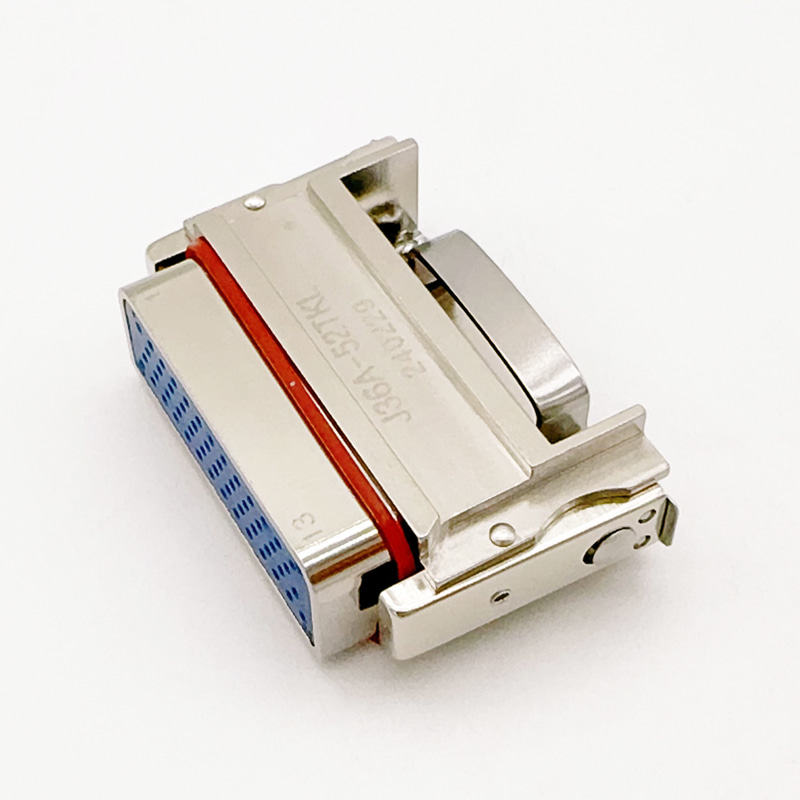
The fundamental advantage of the rectangular design lies in its ability to eliminate "dead space." In a circular connector, the radial arrangement of pins naturally leaves unused areas near the center or the outer shell. Conversely, a high density rectangular power connector utilizes a grid-based contact arrangement, allowing for a much higher number of signal and power lines within the same footprint. This allows designers to stack connectors side-by-side with zero wasted horizontal or vertical gap.
According to the latest 2024-2025 market analysis by the International Electrotechnical Commission (IEC), the demand for modular rectangular interfaces has surpassed circular variants in modular avionics by approximately 18%, primarily due to the need for standardized rack-and-panel integration.
Source: IEC 61076-2 series - Connectors for Electronic Equipment
| Geometric Factor | Circular Design | Rectangular Electrical Connectors |
| Pin Arrangement | Radial (leaves peripheral gaps) | Grid/Matrix (maximizes area usage) |
| Stacking Ability | Poor (circular arcs prevent flush mounting) | Excellent (linear edges allow seamless stacking) |
2. Enhanced Integration with Surface Mount Technology (SMT)
Modern high-density PCBs rely heavily on Surface Mount Technology. A low profile rectangular connector is inherently more compatible with automated SMT pick-and-place machines. The flat top surface of a rectangular housing provides a stable suction point for robotic nozzles, whereas circular connectors often require specialized adapters or hand-soldering, which increases production costs and introduces potential points of failure.
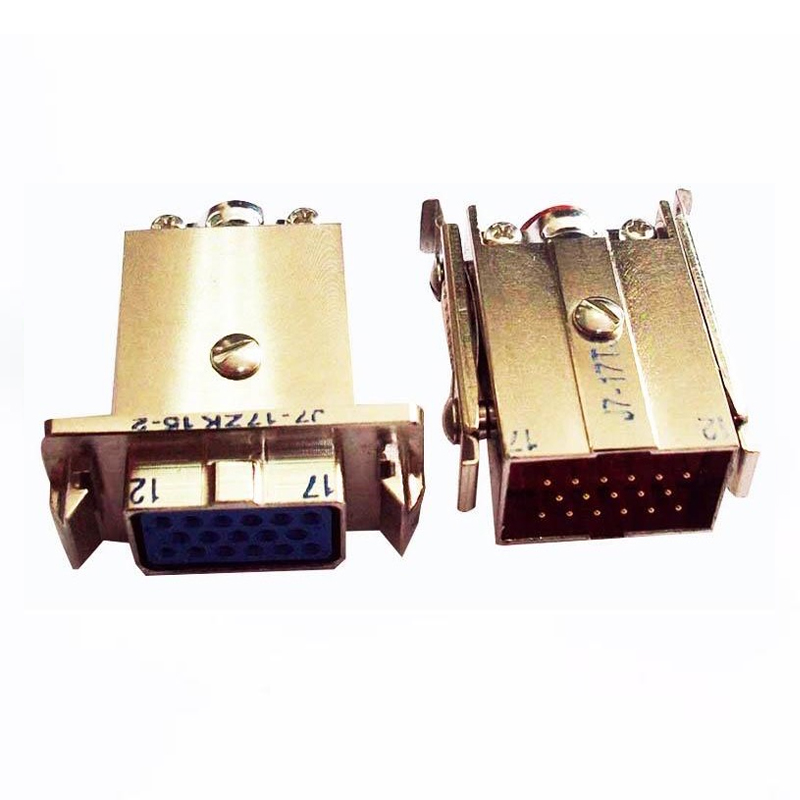
By utilizing our J7, J14, and J20J series, engineers can achieve a lower vertical profile on the board. This is critical for aerospace grade rectangular connectors used in satellite systems, where height constraints are as stringent as footprint limits. Our technical center ensures that these connectors provide electromagnetic compatibility (EMC) alongside their physical compactness.
3. Mechanical Stability and Vibration Resistance in Harsh Environments
A common misconception is that only circular threads can provide military-grade security. However, the ruggedized rectangular connector system employed by Taizhou Henglian uses advanced locking mechanisms—such as jack-screws and polarized shells—to ensure high reliability under extreme vibration. In high-density layouts, the linear locking bars of rectangular connectors are easier to access and actuate than the knurled nuts of circular designs, which often require significant finger clearance for rotation.
Data from the 2025 Global Defense Electronics Report suggests that modern rectangular interconnects now meet or exceed the vibration durability of MIL-DTL-38999 circular standards while offering a 30% reduction in weight.
Source: SAE International - AS85049 Connector Accessories Standards
| Reliability Feature | Circular Connectors | Ruggedized Rectangular Connector System |
| Coupling Method | Threaded or Bayonet (requires radial space) | Screws or Latches (requires only frontal access) |
| Weight Efficiency | Heavier (due to metal shell volume) | Lighter (optimized shell-to-contact ratio) |
4. Multi-Module Versatility and Customization
Rectangular frames allow for "mixing and matching" of different signal types. A single custom rectangular wire-to-board connector can house power, signal, fiber optics, and coax contacts within a single polarized shell. This "hybrid" capability is much harder to achieve in circular formats without significantly increasing the diameter to an unusable size for modern high-density PCBs.
- Hybrid Integration: Combines high-voltage and low-signal pins in one footprint.
- Polarization: Built-in mechanical keying prevents cross-mating in complex systems.
- Scalability: Modular rectangular inserts can be expanded without changing the basic panel cutout.
5. Compliance with Global Military and Industrial Standards
Taizhou Henglian Electric Co., Ltd. ensures that every rectangular electrical connectors series we produce—from the J29A to the J30J—undergoes rigorous inspection in our modern testing facilities. As a qualified supplier of military electronic components for the Communications Department of the General Staff, we strictly adhere to GJB9001C-2017. This ensures that our connectors are not only space-efficient but also possess the high density and high reliability required for the Second Artillery, weapons, and shipping industries.
Frequently Asked Questions (FAQ)
1. Why is the rectangular shape specifically better for high-density PCBs?
Rectangular shapes align with the X-Y axis of PCB design software and manufacturing machinery. This allows multiple rectangular electrical connectors to be placed side-by-side with minimal clearance, effectively doubling the I/O density compared to circular connectors which require rotational space.
2. Can rectangular connectors handle the same power levels as circular ones?
Yes. A high density rectangular power connector is designed with specialized copper alloy contacts that provide high conductivity and low contact resistance, matching or exceeding the current-carrying capacity of larger circular models.
3. Are rectangular connectors suitable for aerospace applications?
Absolutely. Our aerospace grade rectangular connectors are specifically tested for vacuum stability and extreme temperature cycles. They are a preferred choice in modern satellites and UAVs due to their weight-saving design and high pin count.
4. How does Taizhou Henglian ensure the "three-defense" function?
We use high-grade thermoplastic or aluminum alloy shells treated with specialized coatings (such as cadmium or nickel plating) and high-quality silicone seals. This ensures our ruggedized rectangular connector system is immune to salt spray, moisture, and mold.
5. Can I get a customized rectangular connector for a specific project?
Yes. Taizhou Henglian has a dedicated technical center and sophisticated production equipment. We can develop and produce a custom rectangular wire-to-board connector tailored to your unique pin-out, material, or environmental requirements.

- Address : Jiangping South Road, Zhangqiao Industrial Park, Taixing City, Jiangsu Province, China
- Phone : +86 176 0151 5794
- Whatsapp : +86 176 0151 5794
- Email :[email protected]
- Email :[email protected]
Copyright © Taizhou Henglian Electric Co., Ltd
